Delivered ANNUALLY AT THE END OF JANUARY
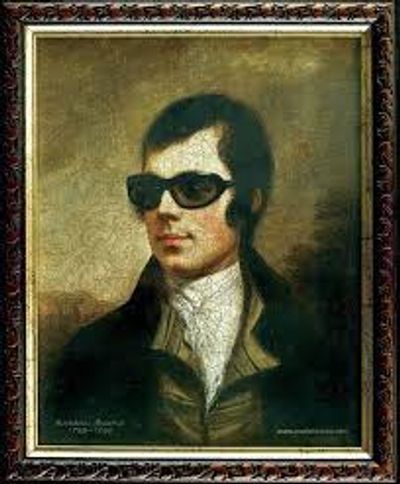
RABBIE BURNS
I’m saddened to say that enroute here tonight, Jeannine and I were required to stop at hospital to see a friend that has just recently been admitted. This is Jeannine's first Burns supper - we were discussing the events of tonight - the telling of tales and encounters designed to understand the man and the legend. While walking down the hallway we heard what sounded like poetry being recited. As we walked closer I stopped, grabbed her hand and said, said to Jeannine, listen a moment, in the distance we heard;
Fair fa' yer honest, sonsie face,
Great chieftain e' the puddin' race!
Aboon them a' ye tak your place,
painch tripe or thairm:
then we heard another voice;
Some hae meat, and canna eat,
And some wad eat that want it,
But we hae meat and we can eat,
And sae the Lord be thankit.
...and then a third;
Wee sleekit cow'rin tim'rous beastie,
O what a panic's in thy breastie!
Thou need na start awa sae hasty,
wi' bickering brattle.
I wad be laith to run and chase thee,
wi' murdering prattle!"
Jeannine said to me “isn’t that nice someone is reading poetry to the patients”.
I looked at her with a smirk, and said no no my dear, this is clearly the serious Burns unit...
My Lords, ladies and gentlemen. I would like to thank you for allowing me the opportunity to speak to you this evening about our immortal bard, Rabbie. My name is Lorne Clifford and it is indeed my honour and privilege to take the opportunity to introduce you to the bard, Scotland’s favorite son, Robert Burns.
I know that, for some of you, this is your first Burns supper. For many people who would like to understand the whole "Burns thing", the first few steps can often be daunting. Most books on Burns assume that the reader has a basic understanding of who Burns was, where he was from, and why he had such an impact. As such, there is a vast gulf between books carrying a few scant paragraphs on the basic background, through to the more detailed biographies, which address the initiated "Burnsian."
What is it about Robert Burns that causes us to celebrate? Why is it that?
Robert Burns is one of the most famous characters in Scottish Cultural History? His importance is immense, not only in terms of his fascinating story and his work……but as a living tradition, carried from generation to generation throughout the World. Everyone, everywhere, who joins in the celebration of Scotland, Scottish Heritage or Scottish Culture, will witness references to Robert Burns. Tonight we will explore a few of these references.
In Arthur Hermans wonderful book, “How the Scots Invented the Modern World: The True Story of How Western Europe’s Poorest Nation Created Our World and Everything in it”, it makes reference to the importance of Burns. Robert’s father was a poor farmer in the south west of Scotland, who taught his son to make a living by handling a plow. But he also saw to it that young Robert received an education worthy of any English gentleman, including studying Latin and French. At school Rabbie’s cockiness cost him some thrashings at the hands of the schoolmaster. Its is said that some of the first books he read was the Life of Sir William Wallace, and Burns stated “The story of Wallace poured Scottish Prejudice in my veins which will boil along there till the flood gates of life shut in eternal rest”. His further readings at the age of sixteen included Shakespeare, Alexander Pope, Addison’s Spectator Essays, poetry of Allan Ramsay, Jeremy Taylor’s studies of Theology, Jethro Tull’s volumes on agriculture, Robert Boyle’s lectures on chemistry, John Locke’s Essay - Considering Human Understanding, as well as geography, history and french philosophy. Heady stuff for a teenager and difficult to imagine a 16 year old today taking his eyes off of his iPhone to read, say, Alexander Pope’s translation of Homer.
Burns certainly was not typical, but was indicative of the studious nature of youth found in the budding book-selling, printing and paper industry emerging in Scotland. Driven by the Presbyterian church’s desire to ensure a literate populace (a populace that could read the bible to be certain), Scotland lead Europe in literacy at that time. Leaving the farm, Burns arrived in Edinburgh in 1787 as a boy genius, virtually self taught, a farm hand and fully capable of writing in high brow fashion, however he preferred to turn everyday speech in the eloquence and power and latent nobility of the everyday man and woman. Burns was more than this - - picture Burns the radical--Burns, the supporter of the French Revolution--Burns, the critic of Religious hypocrisy and Puritanism--Burns, the Freemason.
While this image may not be as comfortable with many as the love-struck yeoman bard is, Burns echoed the sentiments of many of his day, calling for "liberty, fraternity and equality", and speaking out against the excesses of the secular, as well as religious establishment.
Most certainly, Burns's commitment to the ideals of the Enlightenment came from his membership in the Masonic Lodge, much praised and damned for it's equality, both in political and religious matters, among its members. Burns worked on a slave plantation in the Caribbean for a time and became vocally opposed to slavery. But besides these lofty ideals, the lodge also appealed to Burns for other reasons; the camaraderie and spirit of brotherhood that prevailed in the lodge room and the charity towards the widow and orphan. According to William L. Fox in "The Near Miss of Robert Burns", "He found in the experience [of being a Freemason] something unlike the political and religious institutions that had kept his father in a state of perpetual frustration"(p.7). For Burns, Freemasonry was one of the cures for his society's numerous social ills. In "A Man's a Man for a' that", in which Burns speaks of a day when "man to man the warld o'er, shall brothers be for a' that!" Certainly the lodge inspired Burns in his call for the rights of man; Marie Roberts, in "Burns and the Masonic Enlightenment" states that Freemasonry not only spoke out for the ideals of "liberty, fraternity, equality", but also was responsible for the creation of nationalistic feelings and fervour, as a number of Freemasons played prominent roles in the American and French Revolutions.
Rabbie’s radical viewpoints and his love of the common man and common poetry disappointed his mentors and while it made him Scotland’s favourite poet, even unto today, at the time it drove him out of Edinburgh, to financial strife, and some say, into the bottle. While in Edinburgh, Burns met his contemporaries, including a young and very impressionable Walter Scott, who was interested in what was going on outside of the university, and became one of those who were trying to salvage what they could of Scotland’s history and folkways, including its Gaelic and Scots heritage before it washed away in the flood of cultural change.
The memory of the atrocities at Culloden and Inverness were only a little more than a generation old, the industrial revolution was about to fully engulf the lands to the south, the enclosure acts were forcing land owners and tenants alike into rapid change and sheep began to out numbering people. The highland culture was disappearing. Difficult economic times forced Highland Chiefs to abandon the old ways, and crofts, most of which were small strips of land of half an a acre or less that barely afforded to feed a family, were cleared for sheep. One of the largest and most tragic diaspora ever recorded had begun. The price of the Clearances in human terms, was terrible. The impact was to root out the language of the country, together with the people who spoke it.
Scott wrote the poignant words, “In too many instances the Highlands have been drained, not of their superfluity of population but the whole mass of the inhabitants disposed by an unrelenting avarice... the piobrochaid may sound through the deserted region but the summon will remain unanswered”. Burned out and thrown from their homes, the Scots travelled to all corners of the world, and they took Burns with them. Not fifty years after the horrors of Culloden moor, influenced chiefly by the works of Burns and the political acumen of Scott, a revival of the the vanishing folkways of rural Scotland and her customs and a reverence of the world of Robert Burns re-emerged. The stories took on an attractive glow and heroes were born - - a new respect for the house of Stuart and the Highland romantic epic was born -- stories of heroism and villainy, intrigue and bravery, inclusive of maidens and handsome princes, the likes of Flora MacDonald and Bonnie Prince Charlie took hold in neo-Jacobitism and a new form of literature was created - - the original romantic lost cause. Burns, a declared Jacobite, wrote “Charlie is my darlin’”, “The White Cockade” and “Will ye no come back again”. These writings are so closely associated to the Jacobite cause and Scottish independence, many have forgotten that the songs and poems were composed nearly fifty years after the ’45. Walter Scott, when 16 years of age, met Burns and described him later with great admiration:
“His person was strong and robust; his manners rustic, not clownish, a sort of dignified plainness and simplicity which received part of its effect perhaps from knowledge of his extraordinary talents. ... there was a strong expression of shrewdness in all his lineaments; the eye alone, I think, indicated the poetical character and temperament.”
Fast forward a decade after they met, clearly influenced by Burns, Scott went on the hunt for ancient songs, poems, songs and ballads, including capturing tales of those who had actually fought at Culloden and wrote his famous Scottish Border Minstrelsy - it was published in German and influenced the Brothers Grimm, and the more important work; Waverly ‘Tis Fifty Years Since, influenced writers who claim the Burns/ Scott lineage - - Lord Byron, Jane Austen, Charles Dickens, William Thackery, George Elliot, Anthony Trollope. Balzac, Hugo, Flaubert and Tolstoy. Can you imagine a world without Les Mis or the Hunchback of Notre Dame? Further, the writing in this style continued - - Robert Louis Stevenson, Jules Verne and Alexander Dumas owe some reverence to the Burns/ Scott connection. The list doesn’t end there. By his own hand, President Abraham Lincoln wrote a toast for a Burns supper. Bob Dylan, JD Salinger and John Steinbeck have all claimed the influence of the Bard. Russia formally declared Burns the official poet of the people, and a crater on the planet Mercury is named after the poet.
That said, for many, perhaps with the exception of our dearly departed friend, Pipe Major Ken Wilson, the first reading of any Burns Poem may well appear as if it has been written in an unknown foreign language. They can read the words and recognize much of it in Modern English, but there it becomes difficult. How can newcomers to Burns with no knowledge of the old Scots language possibly begin to interpret, and hence appreciate and enjoy, the great mans work? It’s much like a first trip to Glasgow and attempting to order breakfast. Of course, the final straw is the spoken word itself…now that I understand….how on earth do I pronounce the words. Thankfully, the advancement of the internet allows us to read 18th century Scots dialect in real time translation. We will deal with computers in short order and discuss that in a bit more detail shortly.
Robert Burns would most likely be astonished at his fame today, but would be gravely disappointed that so many had access to his writings, yet could not understand his message. Burns, was in fact poor and penniless, and his writing was based in the reality of his time - - his message was rooted in who he was. For Robert, the combination of poverty, hard work on the farm, story telling, the influence of the Kirk, his studies, and a tremendous ability to observe life in general, was the making of The Man. He developed a wicked sense of humour, a controversial frankness decrying hypocrisy, a tender & thoughtful creativity, an alleged thirst for drink, a deep Nationalist pride in his beloved Scotland, and an insatiable passion for Women. As a boy student under the teaching of John Murdoch, and later, by his father, Burns would excel. It was clear even then that he was of considerable intellect, he was a driven lad who would constantly read, particularly the poetical works and novels of the time. Influenced and deeply motivated, he had been writing creatively since an early age, with some of his first pieces, "Handsome Nell", (a poem about his first love, a girl called Nellie & the first indication of his eye for women) having been written when he was only 15. There would be many, many more - muses and poems.
His rise to fame began in July 1786 when at the age of 27, his first work was published by John Wilson at Kilmarnock in Ayrshire, entitled "Poems, Chiefly in the Scottish Dialect" This book (now known famously as "The Kilmarnock Edition") was the catalyst for his celebrity status, it was far from being the sole contributing factor. Considered to be one of the greatest poetical collections ever written, its appeal was obvious not only to the educated, but importantly, to the common man just like Burns himself.
Robert's motivation for publishing his work was initially financial although undoubtedly, he relished the thought of seeing his poems in print. The simple unbound book, covered in unassuming "plain blue wrappers" (which was limited to only 612 copies) was to reach the Socialites of Edinburgh, where it was met with curious wonder. Not only were the literati astounded at the quality of the work, they could not perceive that an apparently ignorant farmer could write in such a manner. He was a genius of the highest intellect.
Having arrived in the capital on a borrowed pony, he roused the fascination of Edinburgh Society who sought his company; Robert's true fame had begun. No doubt, the initial interest in him was of novelty, but for those who met him, his presence was powerful. Burns played the part! Imagine sideways baseball caps of today; his dress was not of the highest classes, but perpetuating his image. His mannerisms were confident, polite although often abrupt or rude. His conversations were enthralling. Interestingly, even the men described him as an attractive chap with a commanding presence and flashing brown eyes. Burns took Edinburgh by storm and had effectively achieved today's equivalent of stardom.
In spite of this his work is the continuing story of an ordinary Scotsman, his background, his encounters, his observations and thoughts. His poems and letters give a detailed account of the life and times, culture and politics of the day, all of which are readily apparent. His words still ring true today within the Scottish Nation and rouse the great passions for which Scots are famously known, at home and abroad. The content, quality, interpretation and variety of his work is quite remarkable. Burns wrote for himself, his friends and his fellow countrymen, not just the academics!
He said about his writing;
“My way is: I consider the poetic sentiment, correspondent to my idea of the musical expression, then chuse my theme, begin one stanza, when that is composed—which is generally the most difficult part of the business—I walk out, sit down now and then, look out for objects in nature around me that are in unison or harmony with the cogitations of my fancy and workings of my bosom, humming every now and then the air with the verses I have framed. when I feel my Muse beginning to jade, I retire to the solitary fireside of my study, and there commit my effusions to paper, swinging, at intervals, on the hind-legs of my elbow chair, by way of calling forth my own critical strictures, as my, pen goes.”
Having lived the life of a rock star in Edinburgh, where he spent his considerable earnings from publishing in only 18 short months, he returned to Glasgow and ironically, took a job as an excise man, collecting taxes.
Burns, was the real deal - - composer and performer. He composed more than 300 hundred songs, hundreds of poems and letters over a 22 year period of his life writing about strong drink, the evil in the world, lampooning hypocrisy, challenging authority, and of course, women and love.
Tam O’Shanter - simply meaning "Tom from the village of Shanter") is considered his great folklore masterpiece, a chilling & fantastic story in which Burns describes his friend Tam O'Shanter, whom, being the worse for drink makes his way home on horseback, astride "Meg" his trusty stead as he travels the road on a wet & wild night passing the Auld Kirk (old church) at Alloway where he believes he has witnessed the Devil himself, hosting a wild party within the sacred building. The story is vivid in imagery and serves to remind the reader of the effects of over-indulgence in alcohol.
A mans a man for a that (A man is a man for all that) - One of the most poignant of Burns' songs, which draws stark comparison between the rich nobility and the poor peasant. The Socialites of the time did not appear to notice that they themselves were the subjects of Rabbie's scorn. The piece is powerful and emotional and describes in the most wonderfully potent yet humbling words, just what makes a true Man.
O’ My Luve is like a red red rose surely the most famous love poem and a well-known song; Simplicity itself, short and tender. This poem uses simple easily understood language, which possibly has added to its appeal.
Holy Willie's Prayer - After Burns' disgraceful interaction with Jean Armour resulting in her pregnancy, he was made to stand before the Kirk Session (Church Council) The Presbyterian Church of Scotland held strong influence within the community, and were severe in their views. His punishment - to show public penance in open church for 3 consecutive weeks! Following this most embarrassing humiliation, Burns wrote "Holy Willie's Prayer" in defiance of the hypocrisy he saw within the Church. This piece was also directed at William Fisher, an Elder of the Church. The Poets imagination playfully yet angrily suggests a prayer made by Fisher, in which the Church Elder's own indiscretions are defended.
My personal favourite; To a Mouse - - This poem wonderfully demonstrates Burns' powers of observation, his deep feeling for humanity and his gentle emotion. One day while ploughing a field, he notices he has cut through the nest of a small field mouse which clearly upset Burns. He then wrote down his thoughts in simple verse, as though writing to the mouse, commenting on the destruction he had caused, his guilt and his sorrow. He remarks on the comparison between the pitiful mouse, his own wretched life and human frailty.
I said I’d bring some modern perspective into this, so before I close, I’d like to offer a verse, in Rabbie style, adapted to a modern feel to the technological realities of today. This poem was first published in January 2009 in Weird News
Ode to a (computer) mouse
My apologies to the bard, whom, I think, would approve.
Wee, sleekit, cow'rin', tim'rous beastie
Of faded plastic, all pale and yeastie
With two wee buttons and bevelled wheel
I really love the way you feel
Against my hand as you roll around
Your wee mousemat with ne’er a sound
It’s true there’s cracks now in your casing
And your rollerball may need replacing
But still you plough on strong and tireless
Whilst those around you are all now wireless!
Then suddenly with nae a warning
In an act made of the devil’s spawning
Where once it was upon the screen
Your little arrow can nae be seen
Blood pressure rising and lips a-pursing
Instead of cursor there now is cursing
And now your wheel is also sticking
Despite my frantic button clicking
But unfortunately this sort of trick
Cannot be cured with a double-click
The system’s crashed – there’s just one route
Control Alt Delete … and then reboot!
Aye - wee, sleekit, cow'rin', tim'rous beastie,
Of faded plastic, all pale and yeastie
Sitting smugly on your wee mousemat
Ya nae mouse of mine ... ya dirty RAT!
Burns died on 21st July, 1796 aged 37 at Dumfries in the South of Scotland and ten thousand people attended his funeral. Legend has it that many of them were his children. Today, he endures in word, verse, heart, pride, emotion and lineage. During his short life he aspired to great things. After his death, he became legendary, or as some would say, immortal. His immortality runs deep in the veins of all Scots, and those who call Scot’s kin, and, perhaps unknowingly, and he has evolved from mere man to being symbolic of all things Scottish. He is now one of the great cornerstones of modern Scottish History and the significance of his memory will be celebrated this weekend from St John’s to Nanimo, and around the world since the first dinner was held in 1801.
It has been my honour and privilege to address you this evening. Thank you for your careful attention.
I would ask that, as you are able, please stand and raise a glass with me -- Scotland’s Favourite Son, The Bard, Robert Burns.
Delivered RemEMbrance Day 11 NOVEMBER 2015
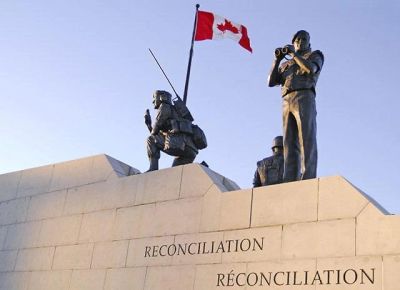
The Modern Veteran
Veterans, Distinguished Guests, Ladies, Gentlemen and a special hello to all the young people here today - - my name is Lorne Clifford. I am a retired police officer, a Canadian Peacekeeper, and a modern vet. I am honoured to be your guest speaker for this Remembrance Day Ceremony.
One hundred years before the start of the first World War, Jane Austen wrote in her ageless book, Sense and Sensibility, “It isn't what we say or think that defines us, but what we do.”
So I ask you on this Remembrance Day, what have we done?
Let me be clear. I am not a combat veteran. I have worked in combat zones. Experts tell us that war, conflict and peace have often been redefined in modern terms as elements of security sector reform - - peace making, peace building and peace keeping. What ever name they are known by, they are roles that Canadians are exceptionally good at. Roles that are performed by citizens of Canada, with honour and dignity by people that we should be extremely proud of. From my vantage point on this podium this morning, the people on parade in front of you have fulfilled, are fulling, or as good citizens, are on a path to fulfill that mandate.
As Canadians we are encouraged to learn about the sacrifices and achievements made by Canada's Veterans during times of war, conflict, and peace, and to become involved in remembrance activities that will help to preserve their legacy for future generations. Generations who, with any luck, will never know the horror of war.
These horrors of war are well documented, and it is nearly 100 years since World War One ended. There are no Canadian combat vets left who can deliver a first hand account of the unthinkable of that war. It has been five years since John Babcock, the last Canadian World War One veteran, passed. Time continues to march ahead for the 88,000 second war veterans approaching an average age of 91 years, and the 10 thousand or so Korean War veterans who will reach an average age of 82 this year. We, who have gratefully accepted all that their sacrifice has purchased, have attended here today to honour and remember them. While it is not enough, we humbly and profusely offer our thanks.
There are more people to thank - I wish to acknowledge another group of veterans. They too, like their predecessors, volunteered to carry the torch. This new breed of veteran is worthy of our respect and acknowledgement. There are some 600,000 current regular and reserve force CF veterans. All that said, It may seem odd to you that a retired police officer has been asked to address this assembly. Please allow me to explain.
This year marks 20 years of participation in international peace operations by Canada’s municipal, regional, provincial and national policing agencies. There are some 3,800 Canadian Police Officers who, since 1989, have served in more than 60 peace operations in 33 countries around the world, many deployed proudly side by side with the Canadian Forces in the most dangerous places in the world - Afghanistan, Haiti, The Sudan, Palestine - - to name a few places where the whole of unstable, uncivilized societies are being replicated on a national scale. Canadian Police Officers, who in tumultuous situations, don battle dress and then build the capacity of foreign police and justice institutions to maintain law and order, in efforts to create a safer and more stable environment for the rule of law, and thus democracy, to flourish.
Deploying the police and the military together makes sense in many of the situations found in an increasingly complex world where crime and combat have blended themselves. Unlike geographically defined conflicts, or clashes of political ideology, in what has been defined by experts as “new wars”, non-state actors raise undisciplined autonomous private militias that are linked by concepts and ideology. These non-state actors use repeated horrific violence to organize crime on an unprecedented scale. They control illegal markets and protection rackets related to, oil and drug markets, illicit gem smuggling, human trafficking, kidnapping and hostage taking in some of the most corrupt counties in the world. It confuses and horrifies us, and peace loving counties governed by the rule of law cannot comprehend it. We observe the images provided by the media, and in disbelief while our conscience and our humanity demand that we act, often only after these disputes have played out on an international stage. The human cost ethically demands the intervention of a cosmopolitan, international response. These are “new wars” are complex and we do not understand them. Step by step they are destroying what ever prospect there is for democracy where they occur. Success will only be determined by the re-structure of functioning society that allows for the rule of law to function and permeate trustworthy civil institutions. The deployment of police officers and their reported success in the monitoring and prevention of violence in elections, teaching and training of modern police services, and the investigations, laying of charges and assistance with prosecutions in war crimes tribunals is largely unreported to the Canadian public.
I’d like to take a moment to acknowledge friends and colleagues; Staff Sergeant Isobel Anderson of the Ottawa Police Service who, today, is in Cambodia investigating War Crimes committed by the Khmer Rouge, Sergeant John Read of the Thunder Bay Police Service and Superintendent Darryl Smiley of the Ontario Provincial Police both of Thunder Bay - both Afghanistan vets, and my dear friend retired Assistant Commissioner Graham Muir of the RCMP - a veteran of both Afghanistan and Haiti, as well as Sergeant Mark Gallagher and Chief Superintendent Doug Coates both of the RCMP - both who both lost their lives while serving as peacekeepers in Haiti. These “new wars” and their challenges are the conflicts endured by the modern veteran, both military and police.
As the roles become blended, Jane Austen’s words are as poignant today as when they were published. We are still defined by what we do. Like the vets of World War One, World War Two and Korea, modern veterans, knowing the risks full well, selflessly and voluntarily answer the call. All vets willingly accepted that which compels them to this Duty of Honour. It defines them thus;
"A veteran is someone who, at one point in their life, wrote a blank cheque made payable to their government for an amount of "up to and including their life."
The value attached to this cheque is enormous.
I answered when I was asked, like hundreds of thousands of other Canadians. In an effort to explain why we answered and continue to answer the call, I have often quoted the words of John Stuart Mill from his inaugural address to St. Andrew University in 1867 - “Bad men need nothing more to compass their ends, than that good men should look on and do nothing”. Good men, and women, who believe that they could make a difference. And they did. However, its devastation is undefinable. The depth, scope and breadth cannot be measured. The account is in millions of Canadian lives, each life with a name and a history attached. These men and women are truly special and are valued for the sacrifice they made. Corporal Anthony Boneca. Private Robert Costall. Private Josh Klukie. The cost has impacted our nation, our communities and our families, who, on a daily basis pay the price of so grievous a loss. For others who have come home, it is frequently more than they can bear. Their injuries both seen, and unseen, define who and what they are. We must continue to provide an unwavering line of defence and support for these ordinary men and women who were asked to extraordinary things. Support for all veterans and their families. We must ever reflect on, and never forget the cost, during a moment of silence. As the phrase so clearly indicates, at the going down of the sun and in the morning, we will remember them.
The thoughts of an Australian Prime Minister, Julia Gillard speak to me in the telling moments of silence.
“Silence is a gift of contemplation of things that mean so much to us, earned by those who gave, and continue to give so much of themselves”.
By contrast, for me, the most difficult moments are often found in silence. Silence is the place of solace where personal reconciliation with the unspeakable, occurs. Sadly, it is also this silence that, upon coming home, so many of our veterans dwell and wrap themselves in. Having seen and done things too awful to ever acknowledge, or to share with people who could never fully understand. There are many tributes to war, conflict and peacekeeping - memorials, wreaths, poems, songs and ceremonies. All of them reaching for the unsayable. All of them falling necessarily short. Perhaps the only memorial that fully touches this enormity is silence - - the silence expressed here today.
Ladies and gentlemen, young people, colleagues, friends of peace all, I thank you for having attended this service of Remembrance to ensure that our veterans are acknowledged, respected and remembered.
I will leave you where I began considering the question offered at the start of this address.
What have we done?
We have remembered. On behalf of the men women and young people assembled on parade here today, I thank you.
Lest We Forget.
https://www.cbc.ca/news/canada/thunder-bay/thunder-bay-remembrance-day-lorne-clifford-1.3313710
Delivered MAY 2025 - farewell speach GIVEN TO 309 RCSCC
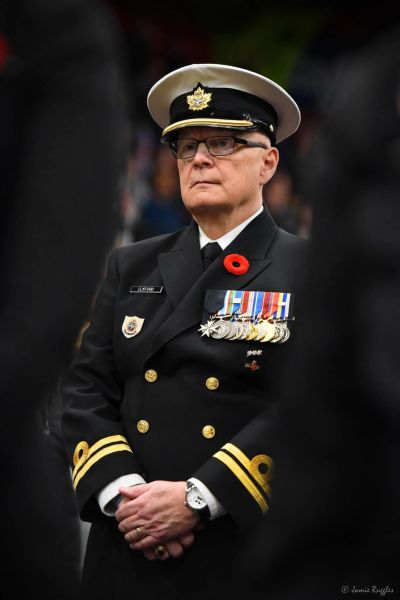
Saying Goodbye
Good evening, everyone.
Thank you for being here tonight. In putting this message together I realized it is pretty hard to summarize 34 years of involvement with this team in five minutes. Mixed in with a range of emotions - gratitude, pride, a little disbelief, and yes, a touch of sadness, its hard to believe that retirement is here.
When I first came to the Fort William in 1991, I never imagined how deeply this program—and all of you—would shape my life. I signed up to teach, to guide, and to serve. But what I didn’t expect was how much I would learn along the way — from each and every one of you. I’ve got a few thank you to say so please allow me a few minutes.
To the directing staff - not just of 309 but of all the units - the officers, civilian instructors and volunteers - my peers - You are the backbone, often spending more time with other people’s children than with your own, always called upon to unfailingly demonstrate the ethos of this programme while young eyes observe and impressionable minds record, minute by minute, day in and day out. We don’t do this kind of work for applause. It’s measured in small but significant ways. We do it for those little moments when you realize you’ve helped a young person believe in themselves. And that’s what we have done together. I will take that with me as one of my greatest triumphs in life.
To the various course staff, clerks, command staff, zone training officers, area officers, area assistants, OC’s and CO’s - you are the leadership who guided me, helped me grow not just as a COATS officer, but as a person. I carry these lessons, good and not so good, with deep gratitude.
To our amazing Lakehead Branch of the Navy League and our community support partners - you have been there time and time again supporting the initiatives that we undertake in pursuit of the creation of excellence in young Canadians. You don’t get enough credit, so here’s a little more of it now. Mr. Murphy - thank you - Craig - you have always had my six, I cannot thank you enough for that.
To the parents and caregivers - you have trusted me with the young people in your life. It has been my greatest honour to work with them allowing me to be a coach, guide, mentor, and friend during the lessons of adolescence, not all of them easy. I hope we returned that trust by helping them become stronger, more capable, and more compassionate versions of themselves.
To my family - my wife, Jeannine - you have endured more in the last decade and your sacrifices often went unseen by others, but never by me. You’ve been my anchor and my greatest supporter and cheerleader. There were long nights. There were freezing mornings. There were training weekends where I questioned my life choices but I would do it all over again in a heartbeat knowing you supported me. Thank you.
To all of you guiding and supporting this programme - It’s about doing the right thing, even when you think no-one’s watching. It’s about lifting someone up when they’re struggling. It’s about being the kind of person others can count on. I want to thank you for your friendship, your loyalty and your absolutely relentless sense of duty. You made the hardest days bearable and the best days unforgettable.
Finally, to the most important people here - the cadets; you are at the heart of it all. You need to know that you have challenged me, inspired and amazed me, and sometimes even driven me a little crazy—but every single one of you reminded me why this program matters and of important lessons - that leadership is earned, not given. That growth takes time. And that respect is something we build together.
I’ve watched many of you - including some members of the directing staff from when they were cadets way back when I was a young officer - I watched you grow in confidence, discipline, and personal resolve. Over the years, I’ve had the chance to work with some amazing cadets—smart ones, stubborn ones, hilarious ones, hardworking ones, troubled ones and sometimes all those traits in one person! I’ve seen quiet kids find their voice, unlikely leaders rise, and lifelong friendships forged on drill decks and at training events. I’ve seen setbacks turned into comebacks. I’ve watched you push yourselves - past what you thought you could do and come out stronger every time. You’ve made me proud. You have and continue to give me hope for the future of this country. Keep showing up. Keep learning. Keep pushing yourselves. It won’t all be easy, and you won’t always get it right—and that’s okay. But if you stay committed and stay kind, you’ll do just fine, and cadets will prepare you, no matter where life takes you.
As I step away, confident in Lt(N) Fraser’s leadership, I know I’m leaving this programme in good hands, and, also because the future is standing right here in front of me. I leave with a full heart, proud of what we have done together, proud of what I’ve given and thankful for what I have received in return - camaraderie, purpose and a lifetime of memories, but thankful most of all that I got to walk this path with you - that you allowed me to be a part of your journey. While I am retiring, the mission continues for you - stand tall and keep making the Fort William proud.
Last, I’d like to share this personal reflection with you about the meaning of this uniform. Tonight, when I get home, I will hang up it up for the last time and that is certainly bitter sweet. I’ve often said that, if you never do anything to embarrass this uniform, it will never embarrass you. It is no secret that I am deeply connected to and fiercely proud of what this uniform represents - - not the rules, ranks, or routines - - I’m speaking about the values we strive to live by: respect, integrity, loyalty, and above all - - service to something greater than yourself. The challenge has always been to let these values shape and mold you, to serve as tests in your daily living and to define your character. My last challenge to you is to let the uniform serve as a reminder of who you want to become, until it is who you are. Every time you put it on, strive to be the very best version of yourself.
I’m saddened I will hang up my uniform for the last time, yet, what sustains me is knowing that the values it represents have become who I am. What I hope, in some small way, is that I’ve passed this lesson on to all of you, and it will continue with you.
In conclusion, it has been my great honour and privilege to be part of the Canadian Armed Forces as a Cadet Instructor Cadre Officer in the Cadet Organizations Administration Training Service and be connected to Royal Canadian Sea Cadet Corps Fort William. This has been a life journey for me and to have been part of this experience has been nothing short of incredible.
I wish you fair winds and following seas.
Delivered MAY 2026 - SHUNIAH MASONIC LODGE
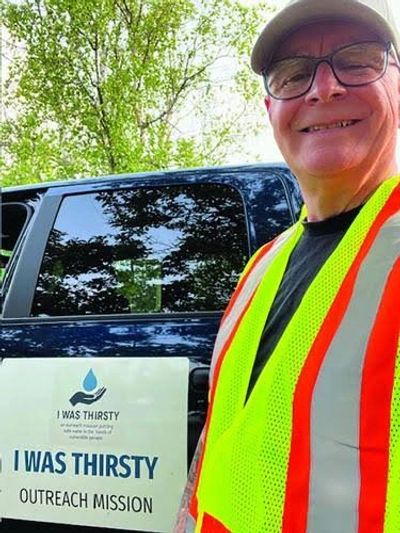
Promoting I WAS THIRSTY
Gentlemen, It is both my honour and privilege to have been invited to speak with you this evening — to share a story about a small nonprofit I recently started called I Was Thirsty.
Our mission is very simple… To get safe drinking water into the hands of our most vulnerable people — those living in encampments, and those surviving on the streets.
The name of the mission comes from scripture — from the Book of Matthew 25:35 “I was hungry and you gave me something to eat. I was thirsty and you gave me something to drink. I was a stranger add you invited me in…”
Before I tell you about the scope of this mission — about the numbers, the volunteers, and the outcomes — I’d like to take you back to where it all began.
To the moment that inspired it.
In the early summer of 2009, I was on a three-year secondment to the RCMP in Ottawa, serving as Director of the Police Executive Centre at the Canadian Police College.
While I was there, I was invited to apply for a position supporting the United Nations — teaching an all-female class of police officers who would work in Sudan.
The topic was one few of us ever want to confront:
How to investigate sexual and gender-based violence — in a country devastated by war.
A country of roughly 13 million people, seventy percent of women had been the victims of rape — a weapon of war used deliberately to destroy communities.
The result was predictable: an explosion of HIV and AIDS, broken families, and psychological trauma on an unimaginable scale. The Canadian project that I was involved in saw huge growth — organizations like UNICEF — supported by the World Bank — engaged to empower and train health workers, including midwives and nurses to detect, treat, and to prevent gender-based violence, yet violence against women and girls remains exceedingly high in the upper Nile Region.
It was my entry into the realm of international service that included several more trips to Africa doing this work directly in Sudan, and a year long mission where I served as the Canadian Contingent Commander supporting a mission reconstructing civil society in Palestine, but more importantly it was my first real encounter with what human suffering looks like when the world looks away.
And it changed me.
After nearly forty hours of travel — through Frankfurt, into Kenya, and finally bumping down what were called “highways,” but looked more like northern Ontario bush roads — I arrived at the International Peace Support Training Centre, just outside of Ruiru.
The heat was suffocating — forty-two degrees by day, thirty at night — and in spite of being located near to Nairobi — a modern cosmopolitan city — the power failed constantly.
I was one of only two men on a six-person team of instructors. Our students were all women, all sworn police officers seconded from African countries. But despite their rank and training, many of their organizations gave them gendered jobs like… “photocopier attendant.” Many were officers in name only — and that gender inequity ran deep. They were to embark on a mission to change rape culture. We were there to lead the training.
Being the junior member of the team I got the task that none of the other instructors wanted. My first assignment was to teach female reproductive human anatomy — so that they could document assaults using correct medical terminology.
It was more than a culturally sensitive topic. Imagine a large group of women, some survivors of trauma themselves, all Black, with their male white instructor at the front of the room.
Then, as often happens in Africa, the power failed. Without the aid of a power point presentation, I introduced the topic.
In the semi-darkness, I carried on with a flashlight and a flip chart and a hastily drawn image of a woman’s private parts. There were gasps.
I wasn’t allowed to point to the diagram with my hand — that was taboo — so I used a pointer. And in the half light we began by discussing the slang names of the anatomy.
Following the gasps were whispers, and then giggles. And then… the room erupted in laughter.
Through humour, and humanity, the walls came down. There is strength in numbers, collectively in simultaneous translation as I pointed to and pronounced the name in English, the women collectively stated the name in unison in either English or Arabic.
By the end of that first session, we were teaching each other — the words, the meanings, the culture — and for the first time, the laughter in that room felt like healing.
As the days went on, we moved from theory to practice — as rudimentary as it was — from note-taking to crimes scene management and photography, from evidence handling to interviewing actual survivors from Sudan.
And that’s when I met a woman I will never forget.
Her name was Nour.
Now safely in Kenya, she reflected on her life in Sudan. She wore a red and white cotton wrap, and spoke through a translator.
As her story unfolded, all eyes were locked on her. She told us that every day, she walked several kilometres to collect firewood and water — because that is what her gender required of her — it was “women’s work.”
And while walking or standing in line for a few litres of water, it was on those journeys that she was attacked — starting when she was twelve. The attacks continued through her teen years and as a young woman. One day, while preparing for her journey to collect water, her husband insisted on accompanying her. She begged him not to.
On that day, they met soldiers.
He tried to protect her. They held him down at gunpoint — an AK pressed to his head — while they gang raped her in front of him.
Then, they executed him.
Her injuries were devastating — internal, deeply painful and permanent —including a recto-vaginal fistula.
And I will never forget her courage, or her story and the strength that it took to tell it.
That was the day I understood — truly — what vulnerability means.
Fast forward to April of 2025.
Most of you know that I spent 30 years as a police officer. With overlapping service, partially concurrent, I served an additional thirty years in the Canadian Armed Forces Reserve as CIC Officer. After 45 years in uniform — in policing, in peacekeeping, and in the CAF — in April on my 65th birthday, I “hung up my boots” for the last time.
For the first time in decades, I had spare time on my hands. Twenty-five hours a week or more… of silence. So, I caught up on reading, and worked through my wife, Jeannine’s honey-do list.
But I found myself reflecting, and searching for purpose again.
Then one day, driving past the homeless encampment at Simpson and Donald Streets, I saw a man carrying a water jug.
Something about the way he held it — the effort, the fatigue — and it was familiar. It stayed with me.
A few days later, while on my way to visit a friend at St Joe’s, near Waverley Library, less than a block from here, I met another man with the identical jug, living in a tent.
We started talking.
He told me that the jug had been given to him by an outreach agency… but there was nowhere to fill it.
He regularly walked the two kilometres return trips to Marina Park, begging for water from boaters refilling their water tanks — and most of them said no.
One day, when he came back from attempting to collect water, his tent, bedding, food, and clothing were all gone. He had been robbed while trying to survive. And I realized — I knew this story. Different place, different context — but the same vulnerability, the same suffering, and the same invisibility, right here at home.
When I started researching, I learned that as of October of this year 652 people in Thunder Bay are living without shelter — up from 550 people last year — more than four times the national average per capita— and more than 78 percent them are Indigenous.
There are no water delivery services to homeless encampments.
And only three public water points in the city — none of them within walking distance of the encampments, each requiring an access fob, a prepaid balance, and a bank account. Things impossible to obtain without a fixed address. In a city surrounded by fresh water… people were thirsty.
So, we built a simple mission:
To deliver safe, clean bottled water — directly to people in need — completely free of charge.
There are no salaries, no administrative costs.
All donations are managed transparently through St. Andrew’s Presbyterian Church and CanadaHelps. - - our charitable partner - - who stepped forward immediately when asked — the mission was launched without bureaucracy or overhead. We have zero paid staff but we have dedicated volunteers—young and old—who have joined me on the road, delivering water on city streets.
Last summer in just 62 days, our pilot programme delivered 15,000 bottles of water, driving almost 2,500 kilometres across the city. Our team of 14 volunteers is accompanied by growing community of donors. Together, we’ve delivered more than 6,800 litres water ( that’s 15,000 pounds) to 12 unique encampments provided hundreds of safe, personal face to face connections. We've built something small and simple, yet deeply meaningful.
We’ve learned a lot along the way. We have a full safety protocol. We deliver trash and recycling bags to assist with litter and used water bottles. We have developed a deeper understanding of the cross cutting issues of homelessness, including specific respect for the concerns of our Indigenous people. And now we have a replicable model that can be adopted anywhere in Canada, and we have made inroads with other communities, church groups and within our fraternity.
The dedicated public educational resources found on our Truth and Reconciliation page speaks to the importance of this work.. These tools help us speak not just to need—but to justice — because many of those we serve are Indigenous— and that isn’t accidental—it reflects generations of systemic inequality — and water security in Canada is as much a matter of justice, as it is charity.
Further, I’m nearly 66 years old and I'm not especially tech-savvy - - but I built a website myself and maintain it independently. It is updated regularly with every delivery and every donation. From the ground up, I’ve raised every dollar through personal outreach by word of mouth, church networks, and the generosity of friends and strangers. I use my own truck, on my own dime, and I’ve personally delivered—or arranged delivery—for every single bottle we’ve handed out. Importantly, we also captured peoples stories giving a human face and names to our most vulnerable. They have been recorded in a daily blog and a available on the webpage.
It cannot be denied that the objectives of this mission align fully with the timeless aims of our ancient fraternity, and with the cardinal virtues that form the foundation of our teachings and lessons. Each of us has stood in the northeast corner, and through that first trial, learned the profound requirements of personal responsibility and upright conduct — lessons that extend well beyond ceremony and into real life.
If I may speak personally for a moment — this mission has become, for me, an opportunity - striving toward a deeper understanding of what it means to raise a superstructure perfect in its parts and honourable to the Builder.
In my search for Light — an endless journey for each of us — I have come to a fuller appreciation of the grand principles of our Craft, principles that no lifetime of study could ever completely reveal.
Brotherly Love has called me to extend that love far beyond the walls of this lodge and even beyond our fraternity itself — reaching from neighbour to neighbour, from race to race, from the “have” to the “have not.”
Relief, which I have already alluded to, was first taught to me right here in this northeast corner. It is by design that I stand in this spot this evening, where each of you have stood - it has required emotional, physical, and financial support not only for our brethren but for the wider community. It transcends mere charity — finding expression in the listening ear, the quiet word of advice, the act of sympathy, and the spirit of empathy — each offered in the hope of restoring peace and dignity to another’s life.
Truth is the most complex of the three, for it depends on perspective and lived experience. Yet I believe we can all agree that Truth demands we live our principles — grounded in community, loyalty, personal growth, and a steadfast drive to act with morality. Together with our unending search for Light, it is fundamental not only to the making of a good Mason, but of a good citizen, and indeed, a good heart.
And so, as I have said, the alignment of these objectives with this mission is undeniable.
Brethren, in conclusion, the woman I met from the Sudan, and the man I met at Waverley Park, and the 550 people living in the same conditions here in Thunder Bay, many who I have met personally, share the same truth:
They are victims of systems that have failed to see their humanity.
I Was Thirsty isn’t just about water.
It’s about recognition.
It’s about dignity.
And above all… it’s about compassion in action.
We don’t have an office. We don’t have paid staff. We don’t have red tape. We just have people who care, helping people in need. We have a truck, water, and a mission.
Every day, I’m reminded of how simple it can be to make a difference - - a bottle of water, and a reminder that someone still cares.
You can find the full story at iwasthirsty.ca.
And finally, Worshipful Sir and Brothers,
I hope you’ll see I Was Thirsty for what it is:
A way for ordinary people to do something extraordinary—starting with a single bottle of water.
Thank you for asking me to be here and taking the time to learn more. If you’d like to join us— I invite you to give of your time, your talent or your treasure — or all three — by volunteering, donating, or simply sharing the story—please reach out either directly to me or through the contact form on the web page.
Starting in June as the summer approaches, we’ll be on the road again this time for 90 days to bring water, daily, to our most vulnerable.
You’re welcome to join us because you can help to make a difference.
Because somewhere, someone is still thirsty.
Thank you.
Delivered MAY 2026 -ROD MCLEOD EULOGY
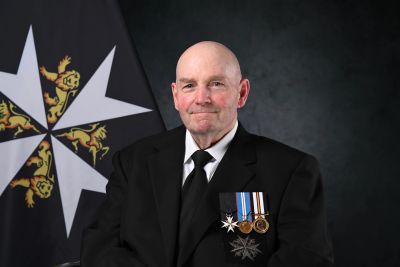
Saying goodbye to a dear friend
Celebration of Life for Rod McLeod
Brothers and Sisters of our St. John family, friends and supporters - - Good afternoon everyone,
My name is Lorne Clifford, and it is my privilege to be here with you today. I have been honoured to have been asked to be the MC for this celebration of the memory of Sergeant Rod McLeod.
Rod was very much alive and committed to service of the First People of this area, and I would like to first open this celebration in a simple but good way acknowledging the enduring presence of our First People of this region and Roddie’s commitment to their safety.
This is the first time in my career with St. John that I bring greetings on behalf of the Ontario Council of St. John Ambulance and our Chair, Dean Tremblay, who extends his sincere condolences to Rod’s family, our St John family, his friends, and all those whose lives were touched by him.
Thank you for being here today as we gather to celebrate the life of Sergeant Roderick (Roddie) McLeod OStJ - a man who gave so much of himself in service to others and who leaves behind a legacy that is imprinted on our hearts and will continue for many years to come.
Today is a time to remember Rod, not only for the years he lived, but for the extraordinary way he chose to live them.
Rod dedicated himself to St. John Ambulance. Fifty-five years of commitment. Fifty-five years of showing up. Fifty-five years of answering the call to help others. Fifty-five years of knowing exactly where you stood with Rod.
Rod was also a man who was never difficult to understand. In fact, you never even had to ask what Rod thought - mostly because Rod was usually kind enough to tell you before you had the chance to ask. He had a gift for getting right to the point. No long speeches, no guessing games, no searching for the hidden meaning - with Rod, the message arrived clearly and usually with a solution attached. If something needed fixing, he knew it. If something didn’t make sense, he told you. And if you had a questionable idea, there was a good chance Rod had already prepared a very practical explanation of why it might need reconsidering. Many times I was gentle guide by Rod’s practice guidance - “Lorne you know that doesn’t make any damned sense”. But that directness was one of the things people respected about him. You always knew where you stood with Rod, and behind every opinion, every correction, and every “suggestion” was someone who cared deeply about St. John, the people around him, and doing things the right way.
Service was not simply something Rod did — it was part of who he was.
To many, St. John Ambulance is an organization. To Rod, it was a his extended family. It was his responsibility and that mission mattered. He believed in the importance of being prepared, being there when people needed help, and ensuring that the traditions and values of St. John continued for future generations.
Rod had a unique combination of qualities that made him who he was.
He was practical. Focused. Direct.
Rod had a way of looking at a situation, cutting through the noise, and getting to what needed to be done. He believed in doing things properly, in being prepared, and in making sure that the job was finished.
There’s one thing we all know about Rod, it’s this: if you’re standing around talking too long, he’d eventually appear and ask the important question — “Are we here to socialize, or are we here to get things done?”
And yes, Rod had a level of stubbornness — but it came from a place of commitment. It was the stubbornness of someone who cared deeply, who refused to accept less than his best, and who believed that serving others mattered.
That determination was not about himself. It was about the people who depended on St. John Ambulance. It was about the clients, the communities, the volunteers beside him, and the generations of members who learned from his example.
Rod had the heart of a true volunteer.
He gave his time, his knowledge, his energy, and his passion. He was not someone who simply wore the uniform — he represented what that uniform stood for.
Rod proudly wore the badge of his office - an Officer of the Most Venerable Order of St John of Jerusalem. An active order of chivalry. When we look at the white St. John cross, we are reminded of the four cardinal virtues that have guided the Order for centuries: Prudence, Justice, Temperance, and Fortitude.
There was no pretence in how Rod lived these virtues.
Prudence — sound judgment based in common sense, wisdom of lived experience, and practical decision-making.
Justice — fairness, and integrity by doing what is right.
Temperance — discipline, balance, and self-control.
Fortitude — courage of his convictions, personal endurance, and fierce resilience.
These were not abstract ideas for Rod — they were lived qualities, seen in how he worked, how he served, and how he led by example.
The qualities that defined Rod - his dedication, his commitment, his practicality, his willingness to step forward, and his belief in doing the right thing - are the same qualities that continue to drive the members of St. John Ambulance gathered in this room today.
That is Rod’s legacy.
My reflection of Rod is that he did not simply serve for 55 years; he helped shape and form a culture of service. The people here today continue that tradition because you believe, as Rod did, that helping others matters.
But, perhaps nothing captured Rod’s dedication more than his beloved ambulances. For Rod, those ambulances were not just vehicles. They represented readiness. They represented service. They represented the promise that when someone was having their worst day, St. John would be there.
Rod cared about those ambulances because he cared about the people they served.
Throughout his decades with St. John, Rod helped build something larger than himself. He shared knowledge, mentored others, preserved traditions, and helped ensure that the spirit of volunteer service remained strong.
Those who knew Rod will have their own memories — the conversations, the lessons, the moments of humour, the debates, and the times when his determination and stubbornness pushed everyone - but pushed them to do better. To BE better. To make St John better.
At this time, I would like to open the floor to anyone who wishes to share a memory, an anecdote, a story, or some remarks about Rod. Whether it is a moment of service, a personal experience, a story that captures his character, or simply something you would like others to know about him, we invite you to come forward and share.
These stories are an important part of today because they help us remember not only what Rod did, but who Rod was.
Thank you to everyone who has shared. Each story adds another piece to the picture of Rod’s life and reminds us of the impact he had on so many people.
I would like to thank all those who assisted in making today happen. You know who you are, and your commitment to making this ceremony important is acknowledged and appreciate.
I would like to especially thank Christian for his graciousness in making today run so smoothly. Sandie for your work behind the scenes in looking after the small details. and thank Pipe Major Bill Peters for playing the Lament for the Children at the internment. I would also like to thank Reverend Frances Savill for officiating at todays service and being kind enough to take on the pastors care duties of our Chaplain Reverend Joyce Yanishewski. Thank you Frances.
As we bring the formal part today’s service to a close, we also mark a final and lasting tribute to Rod’s lifelong dedication to St. John Ambulance.
In recognition of his 55 years of service, commitment, and unwavering devotion to the mission of St. John Ambulance, I have one more duty to perform. We previously recognized Rod’s long service and life membership achievement we dedicated our garage to Rod honour.
This space represents far more than a building. It represents readiness, service, and the spirit of volunteerism that defined Rod’s life. It is where ambulances are prepared, where volunteers come together, and where help begins before it ever reaches the community.
It is therefore fitting that this garage will now bear Rod’s name - a lasting reminder of his contribution, his standards, and his belief in service above self.
May every call answered from this place reflect the same dedication Rod brought to his work. May every volunteer who walks through these doors be reminded of the example he set. And may his legacy continue each time this garage forms part of the broader mission of serving the community.
Today we say thank you.
Thank you, Rod, for 55 years of unwavering service.
Thank you for your dedication.
Thank you for your honesty and determination.
Thank you for holding the standard high.
Thank you for caring so deeply about St. John, the people in this room, and the people we serve.
Rod’s watch has ended, but the example he set remains.
But mostly, thank you for your friendship.
May we honour him by continuing the work he believed in — by serving others, helping when needed, and carrying forward the spirit of volunteerism that defined his life.
Rest peacefully, old friend.
You served well.
You served faithfully.
And you will be remembered.
Lastly, we know that if Roddie were here today, he’d probably have one final instruction for us: “Make sure everything is put back where it belongs… and don’t leave the damned lights on in the garage.”
And knowing Rod, someone is probably still going to check before they leave.
We are going to miss you Roddie.
Thank you.